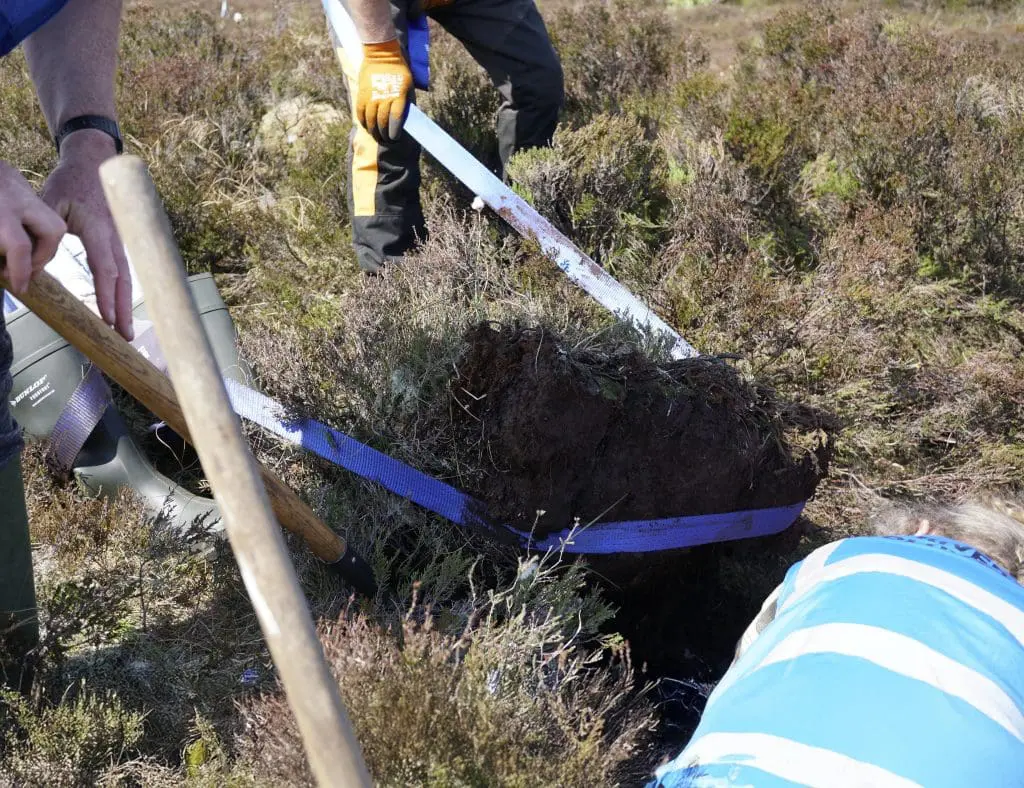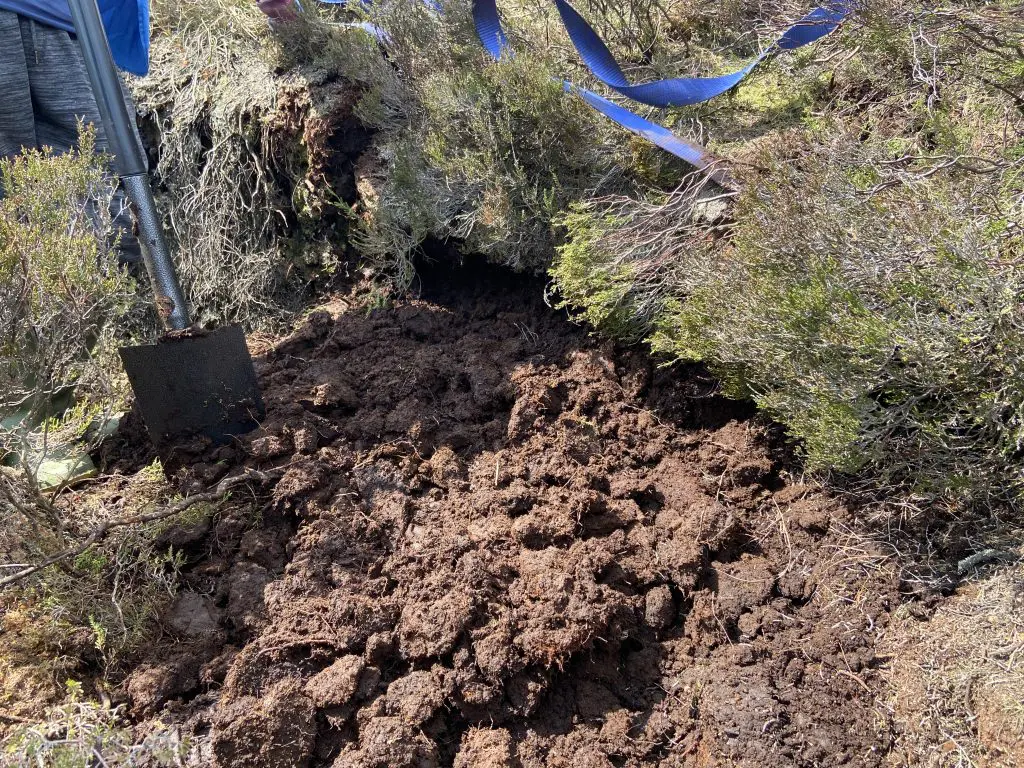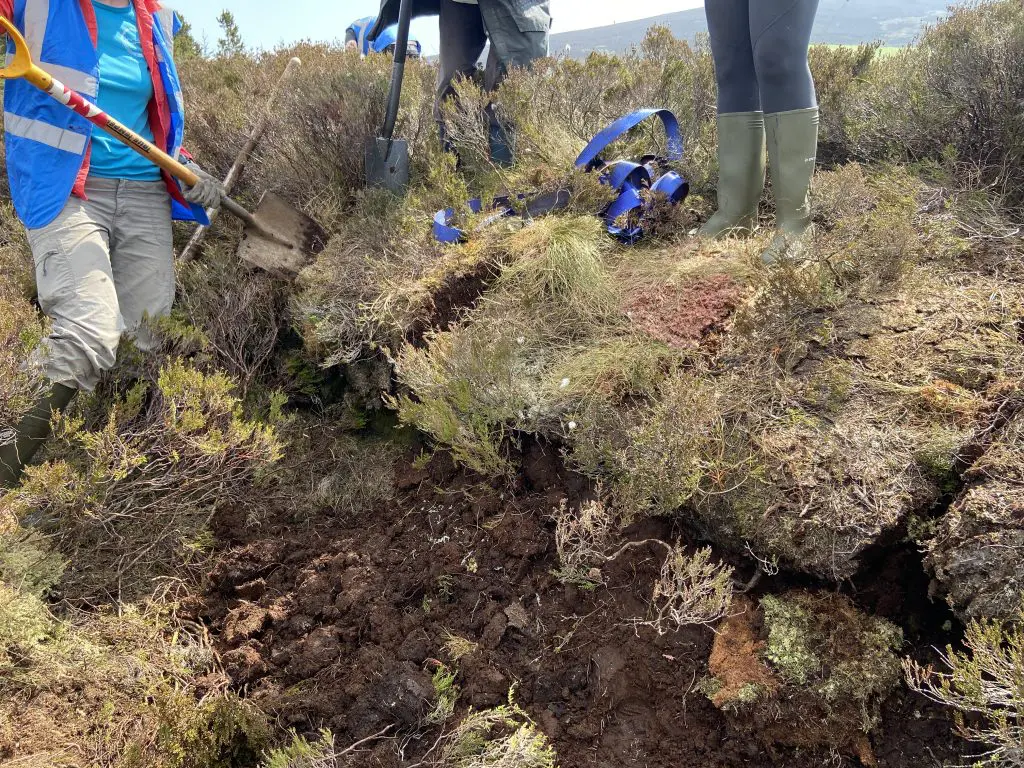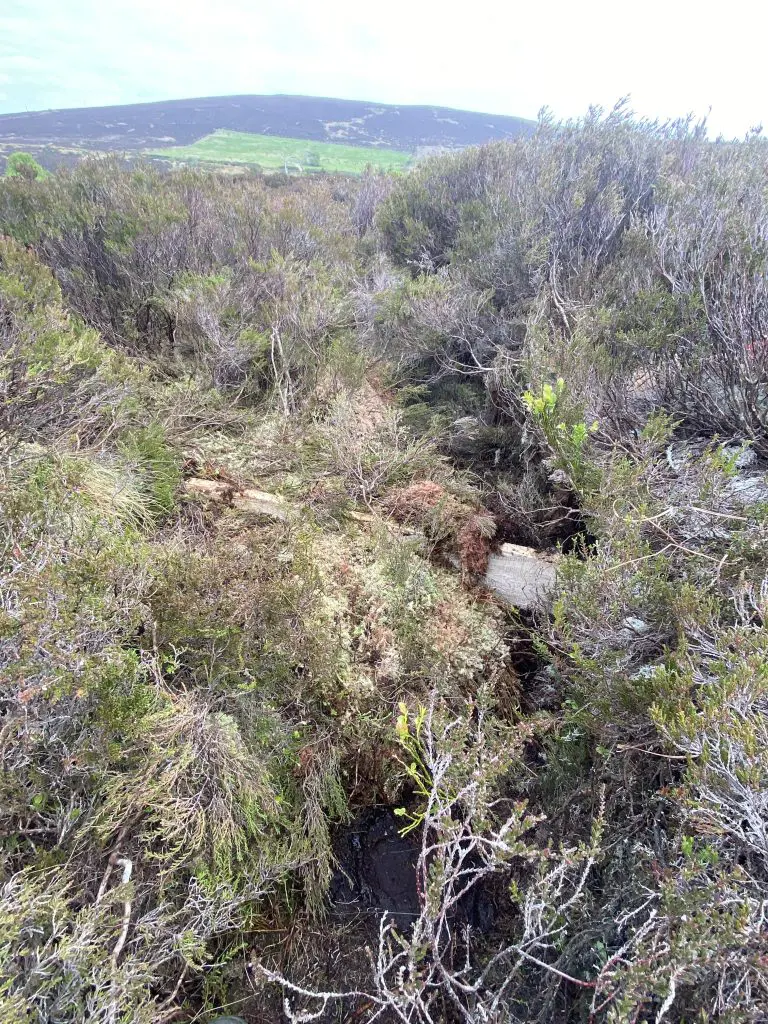
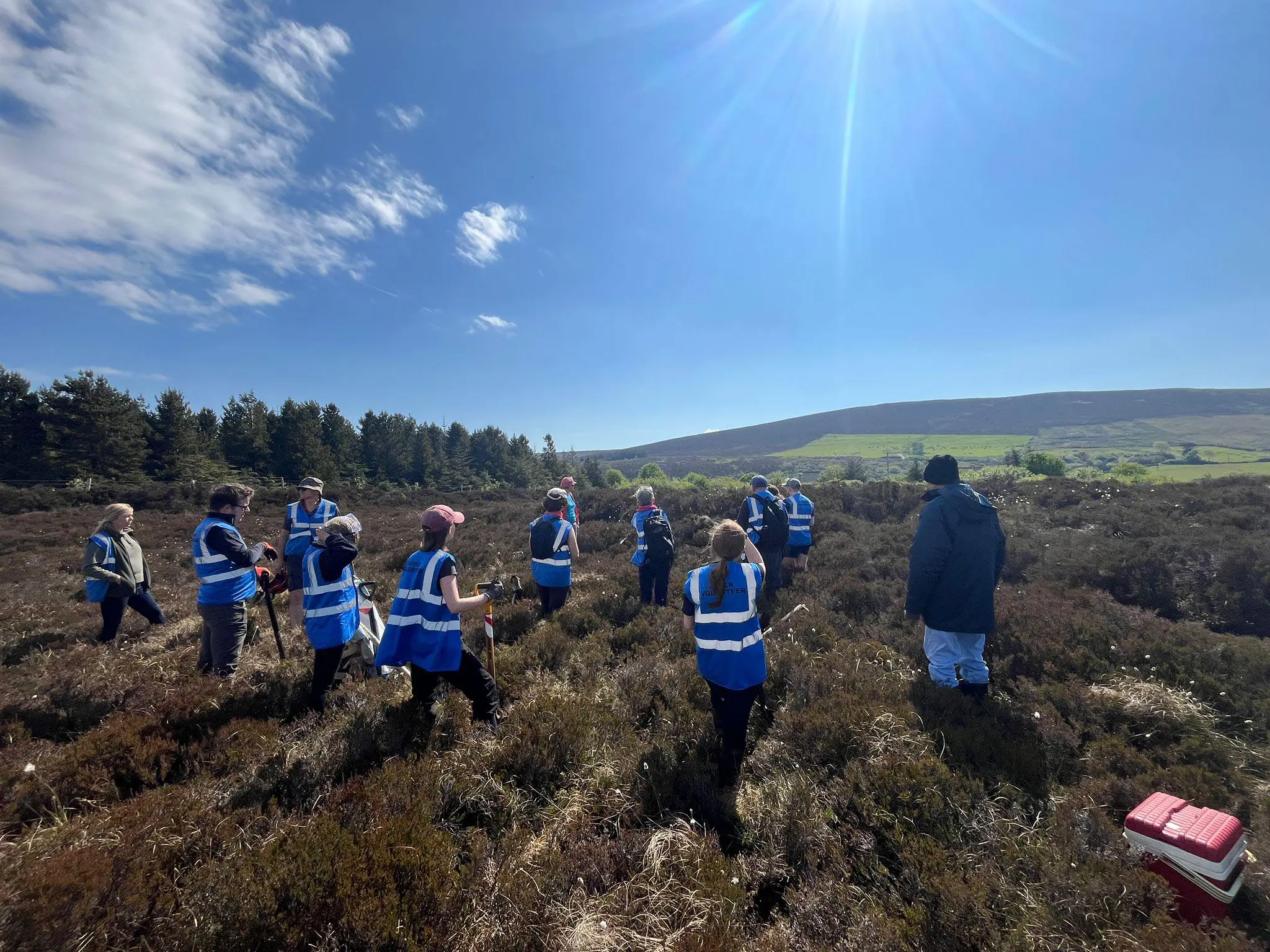
On Saturday 10th May Inishowen Rivers Trust along with Green Sod Ireland and a group of dedicated volunteers made their way to Meenletterbale reprofile a peat hag and install timber dams on a drain. The sun was out, which made it hot work but after a few hours of hard graft we started to see results.
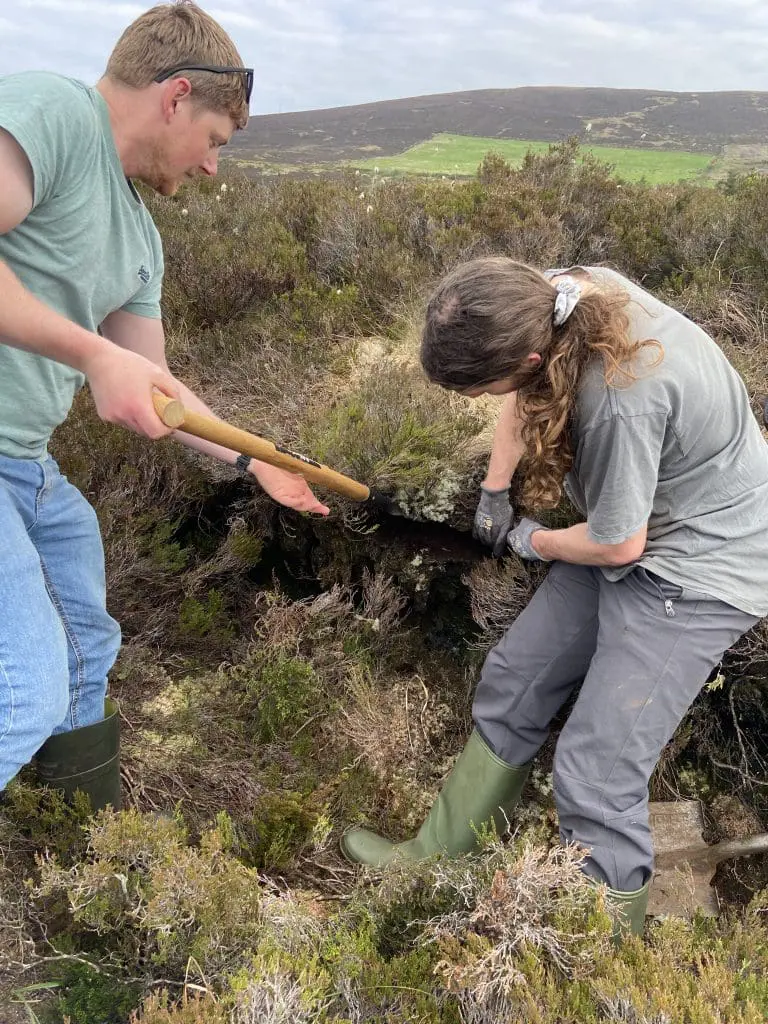
Reprofiling a peat hag is a key technique in peatland restoration, aimed at reducing erosion, encouraging revegetation and reducing carbon loss. A peat hag is a steep, eroded face of peat, often resembling a mini cliff, formed due to weathering, water flow, old turf banks and livestock activity.
During restoration, the hag is reshaped to a gentler slope, typically 30-35 degrees maximum, to prevent further erosion. To do this, the vegetation layer is rolled back ensuring the layer is not completely cut away. The peat below is then reprofiled to the desired slope and packed in ensuring no air pockets. The vegetation layer is then laid back over the area covering the exposed peat; any remaining exposed peat should then be covered with geotextile or any other suitable material to ensure the exposed peat doesn’t dry out.
Additionally, we looked at the underlying causes of erosion. If water flow or livestock activity contributed to the formation of the hag, measures such as redirecting water or providing alternative crossing points for animals may be necessary. The goal is to create a more stable, revegetated peatland that can support active peat formation and reduce carbon loss.
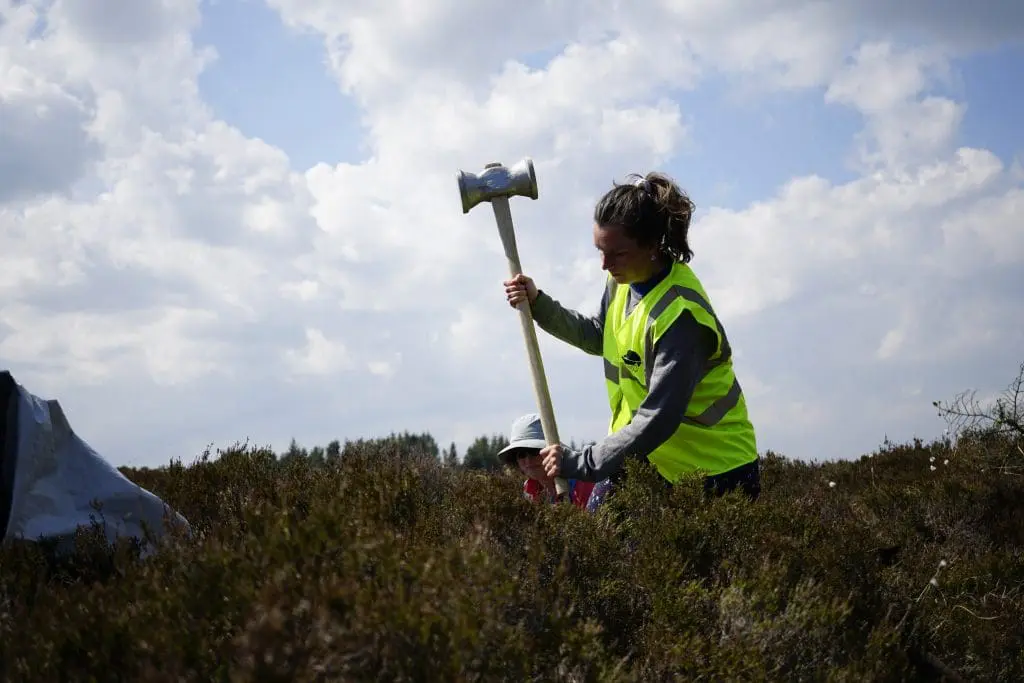
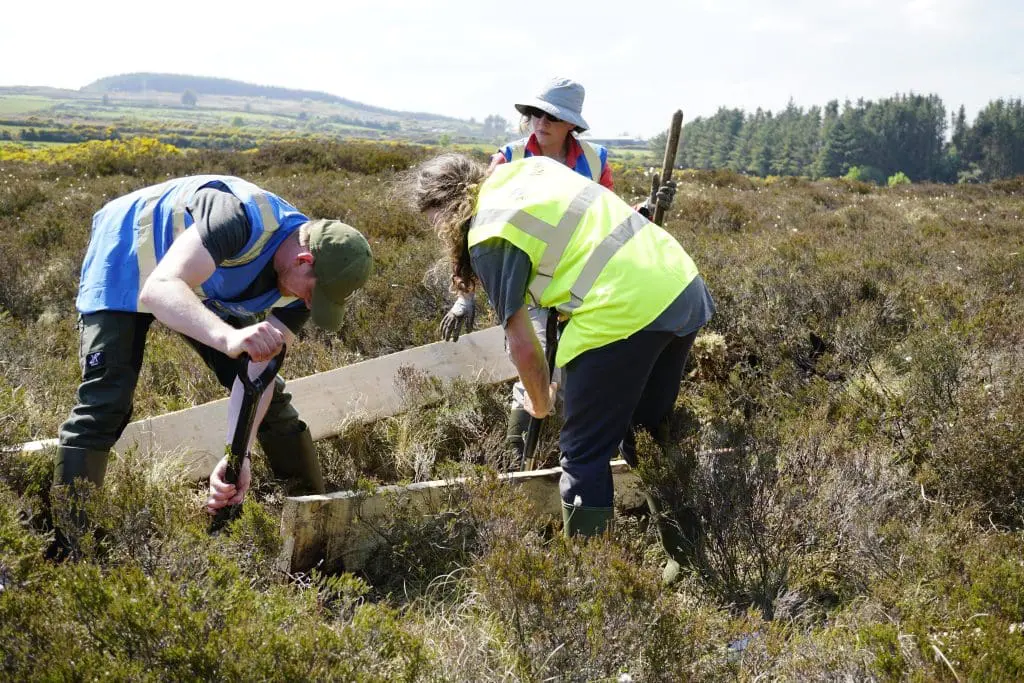
John Doherty (IRT), Trish Murphy (IRT) and Janet Laffey (Green Sod Ireland) adding the finishing touches to a timber dam at Meenletterbale at Green Sod Ireland’s land in Inishowen.
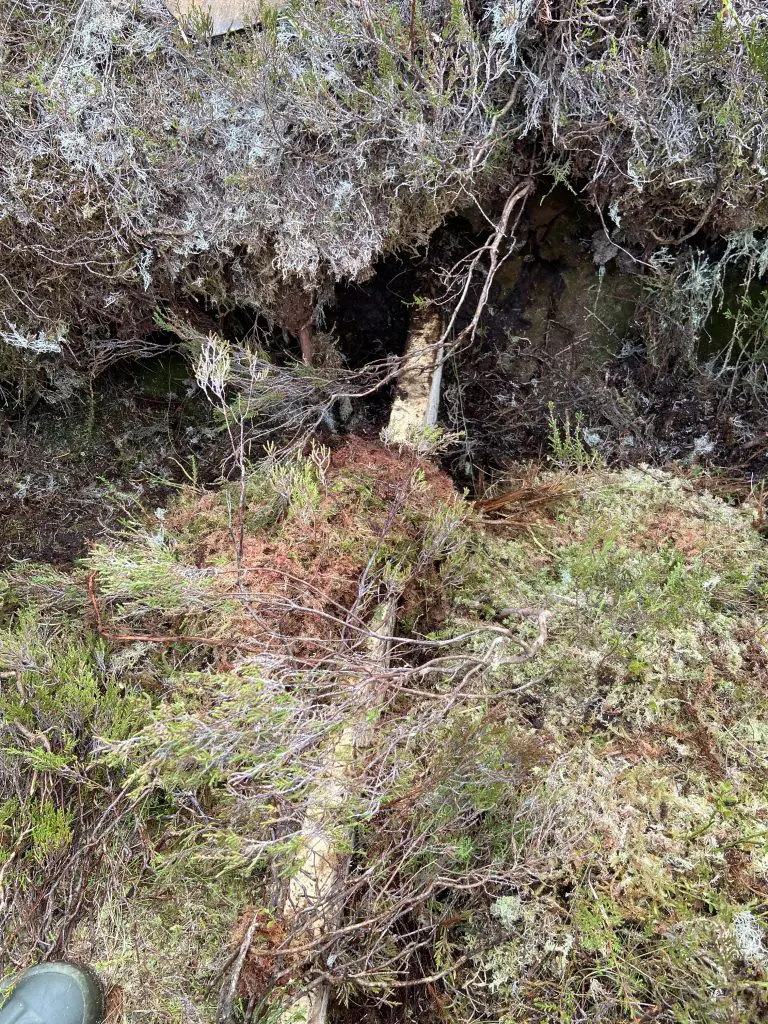
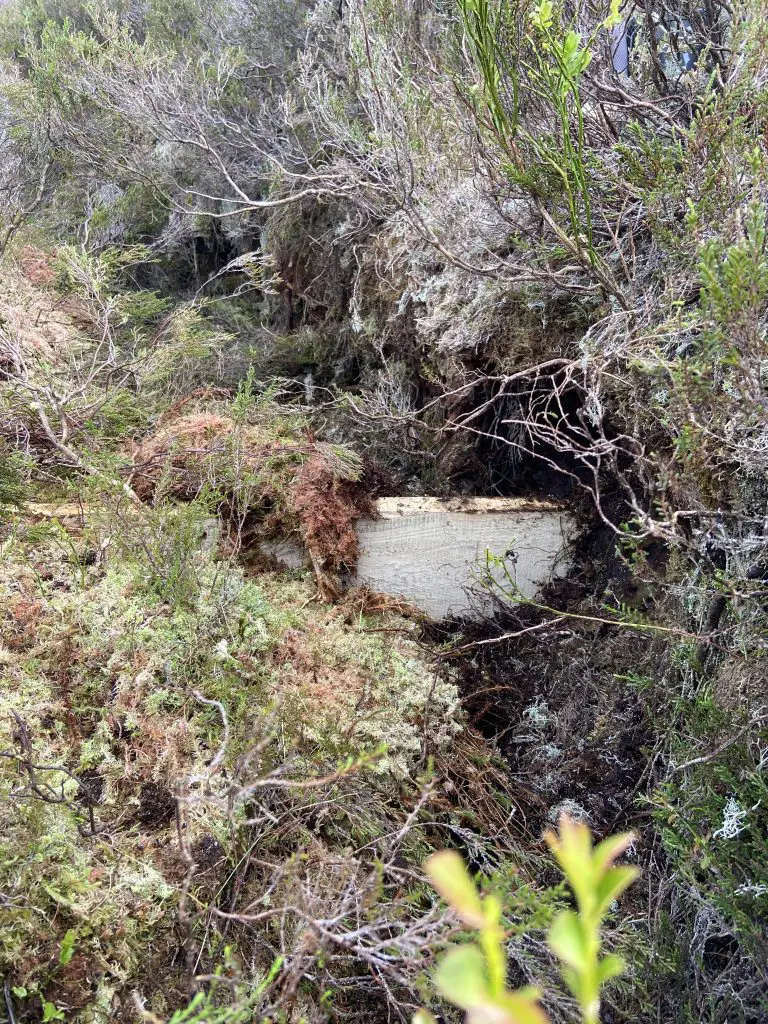
While one set of volunteers were reprofiling the peat hag, the rest of the team were installing timber dams on a drain. This serves serves several important ecological and hydrological functions.
Water Retention – Peatlands rely on a high water table to remain healthy. Timber dams help slow water flow, preventing excessive drainage and maintaining wet conditions necessary for peat formation.
Erosion Control – By stabilizing water movement, timber dams reduce erosion, preventing peat loss and ensuring the landscape stays intact.
Carbon Storage Protection – Peatlands store vast amounts of carbon. If they dry out, they release carbon into the atmosphere. Timber dams keep peatlands saturated, preventing carbon loss and aiding climate mitigation efforts.
Wildlife Habitat Improvement – Many species, from insects to waterfowl, depend on peatlands. Dams help maintain these habitats, ensuring biodiversity flourishes.
Restoration of Damaged Peatlands – Degraded peatlands often have artificial drainage channels that lower water levels. Timber dams help reverse this damage by blocking drains and restoring natural water flow.
The timber used in the construction of the timber dam was grown locally. It was selected for its ability to withstand water saturation.
Timber is placed across drainage channels or watercourses to slow water flow. Stakes or logs are then driven into the peat to anchor the dam in place. Horizontal logs may be stacked to create a barrier, allowing some water to pass while retaining moisture upstream.
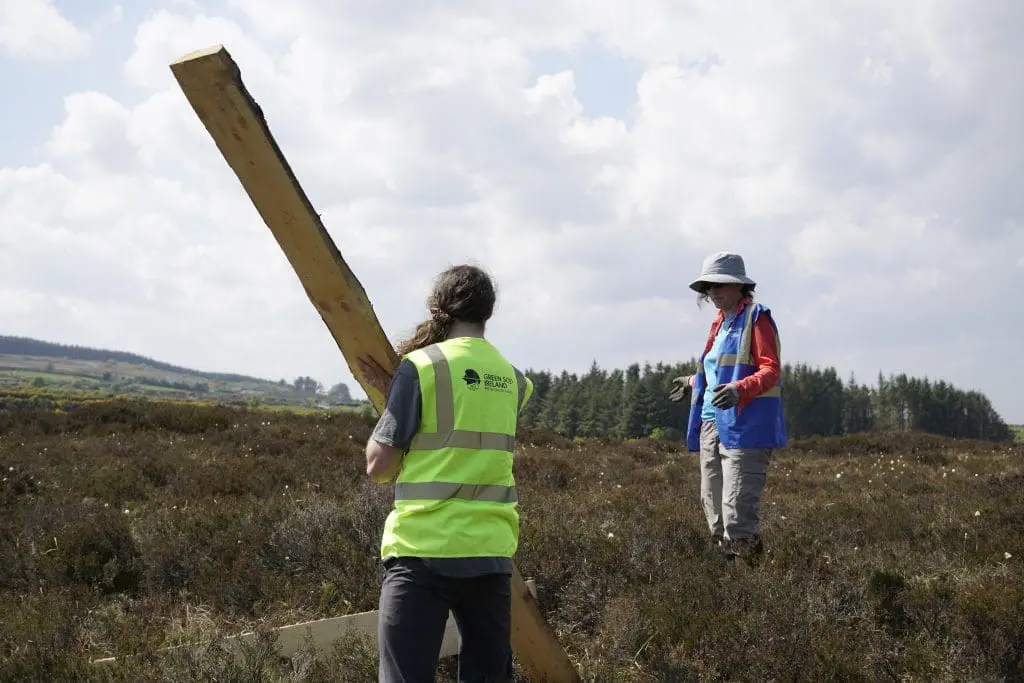
Once the dam is in place we make sure that the dam allows water to seep through slowly rather than blocking it entirely, preventing flooding elsewhere. We will monitor the changes in the water levels to confirm the progress of the restoration.
Over time we will keep track of the vegetation recovery. We will also observe the wildlife activity as increased wetness encourages biodiversity.